
Who supports your technology after the project ends?
Why a finished installation can still leave a business unsure who will maintain the system, and what to settle before the project starts.
A technology project can finish on time, pass its tests, and still leave an awkward question unanswered: who is responsible for this system next month?
The installation is the visible part. Someone designs a change, orders equipment, configures it, and confirms that users can work. Invoices get paid. The project is marked complete. Then an ordinary failure happens, and the business discovers that “complete” did not name a person or a company who will diagnose it.
This is a planning problem, not a criticism of project work. Designing, installing, and supporting are different jobs. They can be done by the same provider, or by different ones. What matters is that the business knows which is which before the work begins.
A technically successful project is not the entire solution
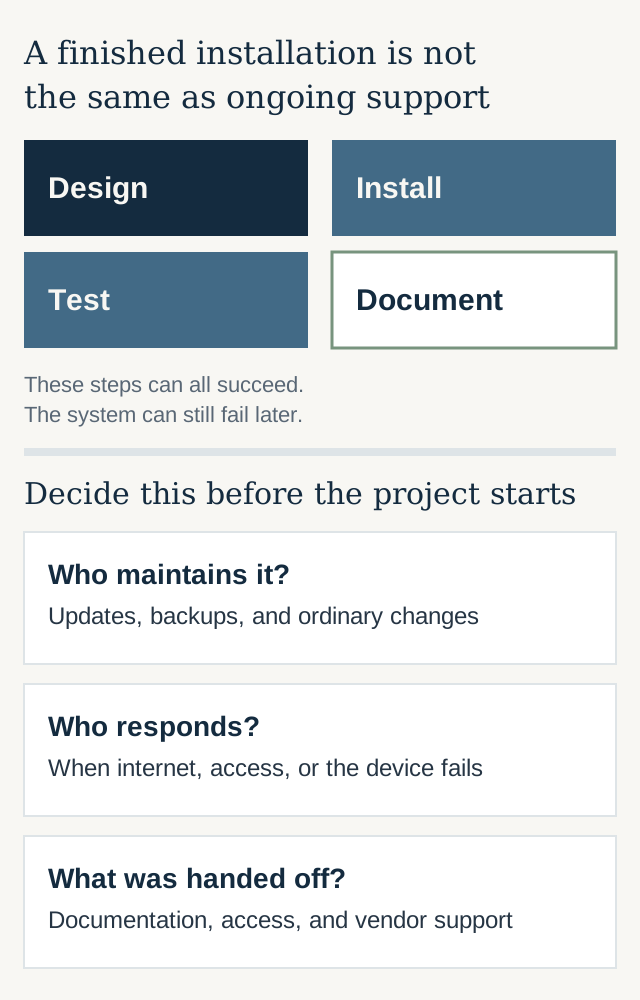
Each stage can succeed while a later one was never assigned.
Designing a solution means choosing an approach the business can actually operate. Installing and configuring it means that design exists, with the settings it depends on. Testing means someone checked a result that matters, such as internet access, remote access, or a restored file, not only that a device powered on. Documenting it means another competent person could understand what was built without starting over.
Maintaining it is the work after acceptance: updates, license renewals, backup checks, and small configuration changes. Responding when something fails is different. It is the call when the office loses internet, or a connection that worked on Friday does not work on Monday.
Proposals often describe the first four stages and treat the last two as obvious. They are not. The company hired to install a device may not be the company that watches it, and the company that watches it may not have agreed to troubleshoot a design it did not create.
The firewall example
Consider a hypothetical project, not a client engagement. A consultant installs and configures a firewall. The old device is removed or left in place as a spare. The office has internet. Remote users can connect. The installer walks through the admin screen with whoever is available, sends a short note, and the project is closed. From a technical point of view, the installation worked.
A month later the business loses internet connectivity. Rebooting the equipment does not help. The business may not know whether the problem is the internet provider, the firewall, a switch, a later configuration change, or another component.
Each cause implies a different call. The internet provider looks at the circuit. The firewall vendor looks at a support contract, if one exists and someone can log in. A managed IT provider may help only if the firewall is in the agreement and they have access. The original consultant may be available, busy, or never have agreed to incident response.
That ambiguity was created when the project was approved without naming who troubleshoots it. The firewall can be a sound choice, and the business can still be stuck because nobody owns the next step.
What a proper handoff should include
The handoff is where a project becomes something another party can operate. It does not need to be a long binder. It does need to be specific enough that a competent provider is not starting from zero.
Configuration documentation should describe the design in plain language: which networks exist, how remote access works, and what else depends on the device. Credential transfer means the business, or its designated support provider, receives administrative access on purpose. Passwords do not belong in a casual email, and they should not remain known only to the installer.
Backup and recovery information should say what is saved and what “recovered” means. For a firewall, that may be a saved configuration and a note about what else would have to be rebuilt. Vendor support information should include whether a contract exists, who can open a case, and when it expires. Acceptance should record what was tested, so later questions are not about whether the project was finished.
Maintenance responsibilities should name who applies updates and who may change the configuration. The designated support provider should be explicit. If that provider is not the installer, both parties should know it before the installer leaves. A complete handoff still does not make the installer responsible for every future outage. It assigns that responsibility, with the information the next provider needs.
Questions to ask before approving a project
These questions belong in the proposal conversation, not in the middle of an outage:
- Who will maintain the new system after acceptance?
- Who will respond if it fails, and during what hours?
- What support is included after implementation, and for how long?
- What documentation will be delivered, and to whom?
- How will administrative access be transferred?
- Is vendor support included, or is it a separate contract the business must buy?
- What happens if the original consultant becomes unavailable?
The last question matters even when the relationship is good. People change jobs and get busy. A system only the original installer can operate is fragile. The business should be able to give the documentation and the access to another qualified provider without treating that as an emergency.
“Call us and we will try” is not the same as an assigned responsibility, especially after hours or when the fault may be the internet circuit rather than the new device.
Planning for long-term support
Operational responsibility should sit with a provider who can actually carry it. That may be the existing IT provider, the company that did the project if ongoing support was part of the agreement, or a vendor’s support desk for a cloud service.
A project consultant does not become the permanent help desk by having built the system. A limited warranty or a block of follow-up time is different from monitoring, patching, and incident response. If those matter, they need to be arranged with someone who offers them.
For a business-critical system, leave the project with a named support path: access, documentation, and a provider who has agreed to use them. The consultant who designed or installed the system can help define that path. The consultant does not have to be the path.
When a project is still being scoped, those support questions are part of planning it, not a separate purchase to think about later. Technology planning and the related advisory work can include them. The planning does not replace a support provider. It makes the choice of that provider, and the limits of the project, visible before the installation is treated as finished.